Investigators: Daniel A. Laó Dávila, Toni Ivey, and Estella Atekwana
This IRES project will support undergraduate research projects in Malawi to understand the role of pre-existing structures on the initial stages of continental rifting. Over the next three years 12 U.S. undergraduate students will travel to Malawi and conduct field-based research focused on investigating faulting in a young continental rift. The principal investigators from Oklahoma State University will collaborate with two foreign mentors from the University of Malawi and the Department of Geological Survey, who will advise the students in the use of equipment and the geology of the local area.
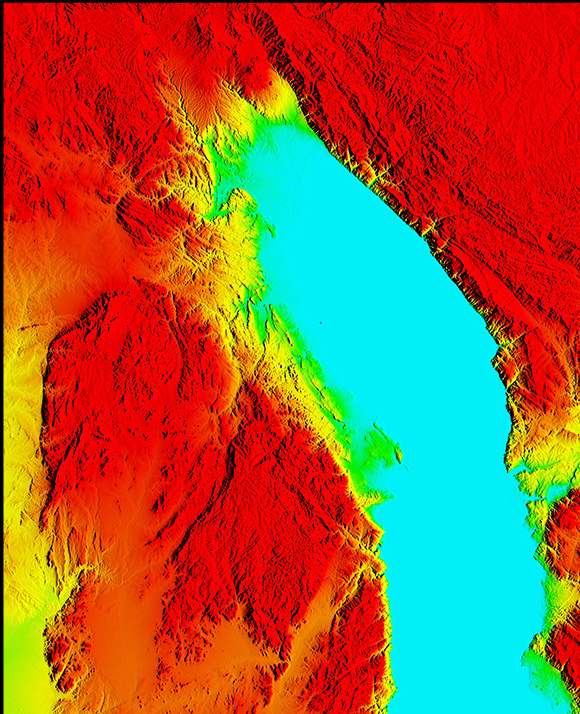
Although the study of rift systems worldwide has enhanced our understanding of the continental rifting process, speculation remains regarding fundamental processes that initiate and control the earliest stages of continental rifting. We still do not completely understand where and why continental rifts initiate nor do we understand the relative role of pre-existing structures in rift initiation. The Malawi Rift, at the southern tip of the Western Branch of the East African Rift System, is one of the best places on Earth to study the initiation of a continental rift. In this rift, fault scarps are fully developed but there is no volcanism. The objective of this project is to understand the effect of pre-existing structures in the crust on the processes of young continental rifting.
This project will provide undergraduate students with opportunities to conduct faculty mentored, hands-on research in an apprenticeship-type model. The geosciences are traditionally by far the least ethnically diverse of all sciences. Therefore, the main goal of our IRES program is to attract primarily minority students and stimulate them to develop independent and critically thinking skills necessary to succeed in a research career in the geosciences. Different aspects of this project will form the basis of undergraduate research projects. Experience to be provided to U.S. Students will include:
- International field experience focused on addressing specific research hypotheses and objectives.
- Skills in geophysical and geological data acquisition and processing.
- Skills such as resourcefulness, resilience, collaborative leadership, and cultural awareness.
- Research skills for graduate school, research careers, as well as natural resources investigations.
- Interacting with African peers, acquiring an enriching cultural experience, making personal contacts, and building relationships that will form the core of future international research collaborations.
- Presenting their results in regional and national/international scientific meetings and publishing their findings in peer-reviewed journals.
Students will participate in the acquisition of geophysical and structural data that will increase the geophysical and structural database over Africa, especially for the initial stages of continental rifting where data are particularly sparse, with the potential to powerfully transform current understanding of continental rifting. Finally, since continental rifts are prolific hydrocarbon producers and are also sites of active tectonics, the results of student projects will provide scientific input into sustainable resource management for natural resources and environmental hazards mitigation efforts in Malawi.